Registered massage therapy · Toronto

Massage therapy that works on the cause, not just the ache

Toronto asks a lot of a body. The average commute here is the longest in the country, most of it spent seated. Desk work and hybrid schedules load the same neck, shoulders and hip flexors five days a week. Training loads climb every spring. Then a benefits year quietly expires on December 31 with money still sitting in it.

Assessment is included in your first session fee, not billed separately. Every request gets a reply within one business day.

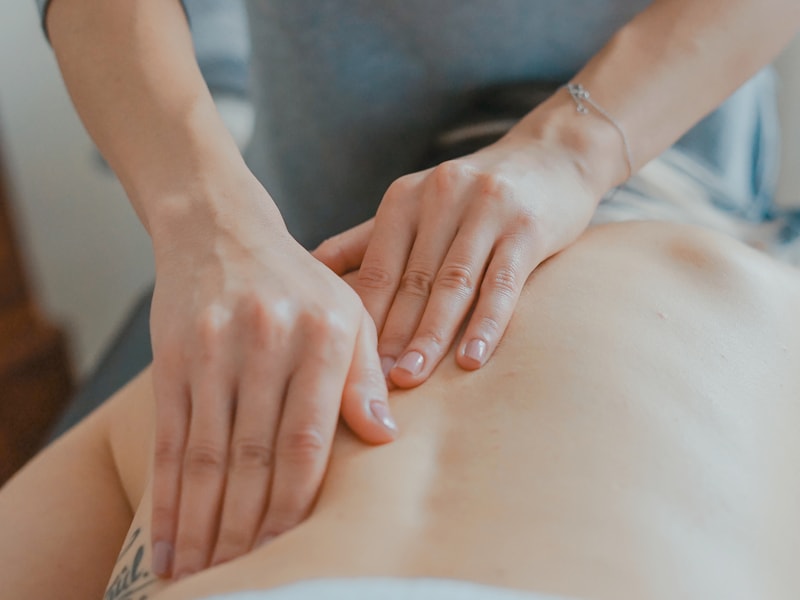
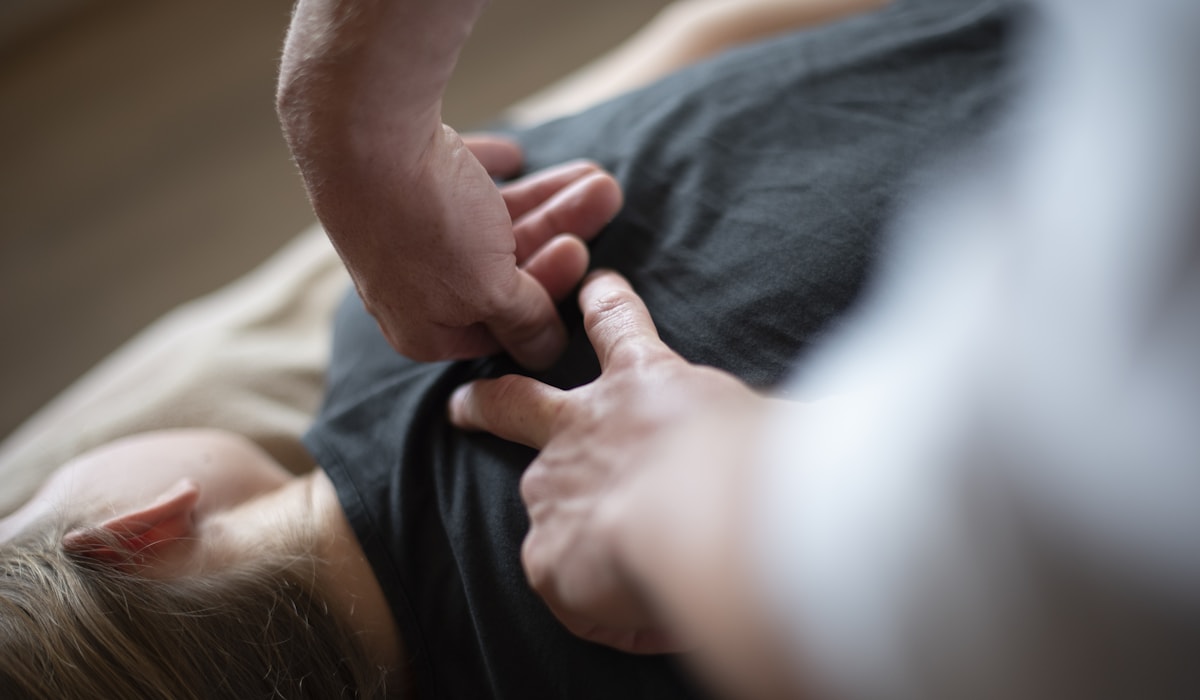
A registered massage therapist applying pressure to a clothed client's upper back during treatment
On every visit
  • Registration number on every receipt
  • A treatment plan you approve first
  • Consent confirmed at every appointment
Numbered receiptsEach receipt carries the treating therapist's CMTO registration number, the date, the service and the amount paid, which is the detail benefit plans ask for before they reimburse.
Plan before handsAssessment findings, the proposed approach and the expected number of visits are explained and agreed before hands-on work begins.
Consent every timeConsent is obtained for each treatment, in writing where a sensitive area is involved, and you can pause or stop the session at any point without explanation.
One business dayEvery request submitted through the contact form receives a response with available appointment times within one business day.

About the practice

A regulated health profession, practised narrowly

Massage therapy is one of Ontario's regulated health professions. It sits under the Massage Therapy Act, 1991 and the Regulated Health Professions Act, 1991, and it is governed by the College of Massage Therapists of Ontario, known as CMTO. The College sets entry requirements, publishes Standards of Practice, runs a quality assurance program and maintains a public register that anyone can search.

That framework matters more than most people realise, because the word "massage" is not protected in Ontario. The titles are. Only a person registered with CMTO may call themselves a Massage Therapist or a Registered Massage Therapist, or use the letters MT or RMT. Both titles mean the same thing. Someone offering massage without those titles is not less regulated by choice; they are outside the regulated profession altogether, and their receipt will not satisfy a benefits plan.

This practice works within that scope and no further. The statutory definition is narrow and specific: the assessment of the soft tissue and joints of the body, and the treatment and prevention of physical dysfunction and pain of the soft tissues and joints, by manipulation, in order to develop, maintain, rehabilitate or augment physical function or relieve pain. Everything offered here fits inside that sentence.

The work is built around Toronto's actual pain patterns. Years of hands-on experience across the city means the case mix is familiar: office and hybrid workers carrying a compressed thoracic spine and a locked-up jaw, transit and highway commuters with tight hip flexors and an irritable low back, runners and lifters training on the waterfront trail and in condo gyms, new parents, trades workers, hospitality staff on their feet for ten hours, and people rebuilding after a collision on an arterial road.

There is no attempt here to be everything. Registered massage therapy is the only service offered, which keeps the assessment honest and makes referral straightforward. When something presents as outside the scope of massage therapy, the appropriate step is a referral to your physician, a physiotherapist, a chiropractor or another regulated professional, and that referral is made rather than worked around.

A therapist assessing a seated client's shoulder during an appointment

Why Toronto clients choose this practice

Six commitments, all of them testable

Each is a process this practice controls and repeats on every file. None of them depends on a credential you would have to take on trust, and every one is testable inside your first two visits.

01

Assessment comes first, every time

The first appointment starts with history and assessment, not with oil. Range of motion, palpation, what aggravates and what settles it, what your work and training actually demand. The findings are explained in plain language before treatment starts, so you understand what is being treated and why. Assessment is included in the session fee rather than billed as a separate line.

02

Registration you can verify yourself, in about a minute

CMTO publishes a searchable public register of every registrant in Ontario. It shows registration status, the certificate type, the year of initial registration with the College and any restrictions or findings against that registrant. You do not have to take anyone's word for it, and you should not have to. Search the register before your first appointment, and search it for any therapist anywhere in the province.

03

Receipts built to be reimbursed

Claims get rejected on paperwork far more often than on eligibility. Every receipt issued here carries the treating therapist's registered name exactly as it appears on the public register, the CMTO registration number, the date of service, the service provided and the amount paid, plus HST shown separately. Where your plan permits direct billing to the insurer, that is set up at your first visit so you pay only the portion your plan does not cover.

04

Treatment plans that are designed to end

A plan states a goal, a proposed number of visits and a reassessment point. At that reassessment there are three honest outcomes: it is working and continues, it needs adjusting, or massage therapy is not the right tool for this problem and you get a referral. Open-ended standing appointments with no reassessment are not a treatment plan, and they are not how this practice bills your benefits.

05

Consent and draping handled properly, without you having to ask

CMTO's Standards of Practice set out the elements of informed consent and require it before any assessment or treatment. Consent is confirmed at every appointment, not once at intake. Written informed consent is obtained for any sensitive area. Draping keeps everything covered except the region being treated, and it is repositioned by the therapist, never by asking you to move it. You can decline any technique, any region, or the whole session, at any moment, and the appointment simply changes shape.

06

Auto insurance paperwork handled properly, not improvised

If your treatment relates to a motor vehicle collision, the file runs through Ontario's accident benefits system rather than your credit card. That means a treatment plan submitted on the OCF-18 form through the Health Claims for Auto Insurance system, direct billing to the auto insurer, and progress documentation kept current so the file does not stall. Ask about this before the first appointment, because starting the paperwork late is the most common reason clients end up paying out of pocket for treatment their policy would have funded.

Massage therapy services offered in Toronto

Eight services, all inside the statutory scope

Indicative price ranges reflect published 2026 Toronto market data, including surveyed average rates for the two Toronto districts and posted rates at comparable Toronto clinics. Your figure is confirmed in writing before your appointment.

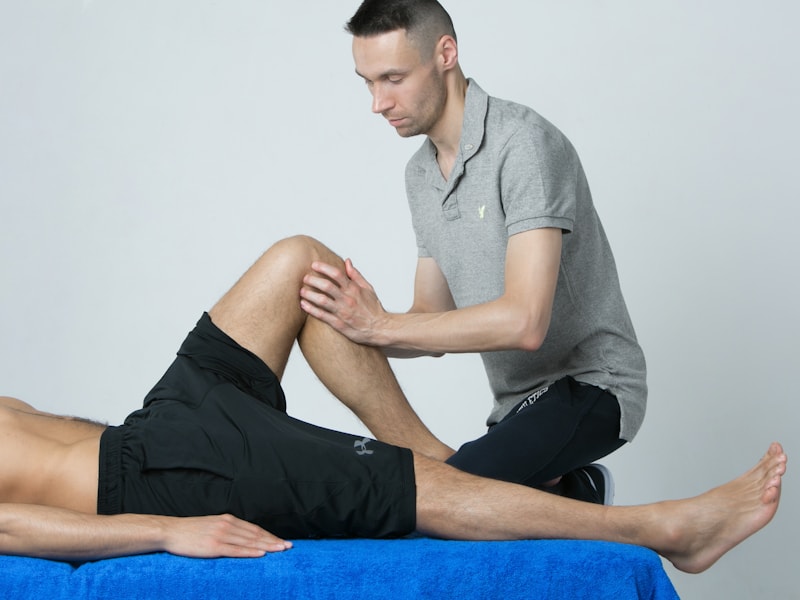
A therapist assessing the range of motion in a client's knee and hip on a treatment table

Assessment and initial treatment

A longer first appointment covering health history, screening for anything that would make treatment inadvisable, orthopaedic and postural assessment, and a first treatment in the same visit. You leave with findings explained, a proposed plan and, where relevant, self-care you can actually fit into a working week rather than a list of exercises nobody does.

  • Full health history and screening for contraindications
  • Range of motion, postural and palpation assessment
  • Treatment in the same appointment, not a separate paid consultation
  • A written plan with a stated reassessment point

Indicative range: $110 to $150 for a 60 to 75 minute initial appointment, plus HST.

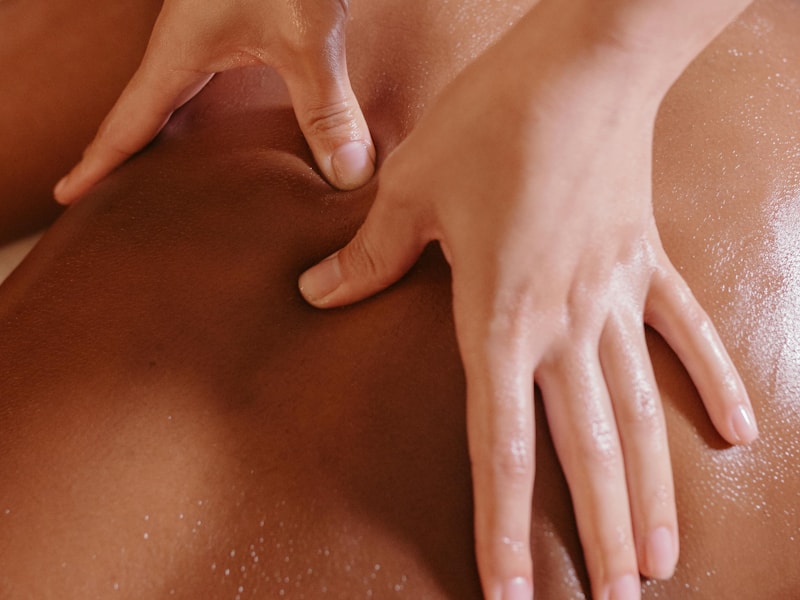
Hands applying sustained deep pressure along the muscles of a client's back

Therapeutic and deep tissue massage

The core of the practice. Sustained pressure into deeper muscle layers and fascia, applied to specific findings rather than uniformly across the whole body. Deep tissue work is not about tolerating as much pressure as possible; it is about the right pressure, in the right tissue, held long enough for it to change. Pressure is negotiated out loud and adjusted throughout.

  • Trigger point and myofascial techniques applied to assessed findings
  • Joint mobilisation within the massage therapy scope of practice
  • Pressure calibrated to tissue response, not to a pain scale you are expected to endure
  • Sixty minutes is the usual working length for two or more regions

Indicative range: $110 to $140 for 60 minutes, $150 to $190 for 90 minutes, plus HST.

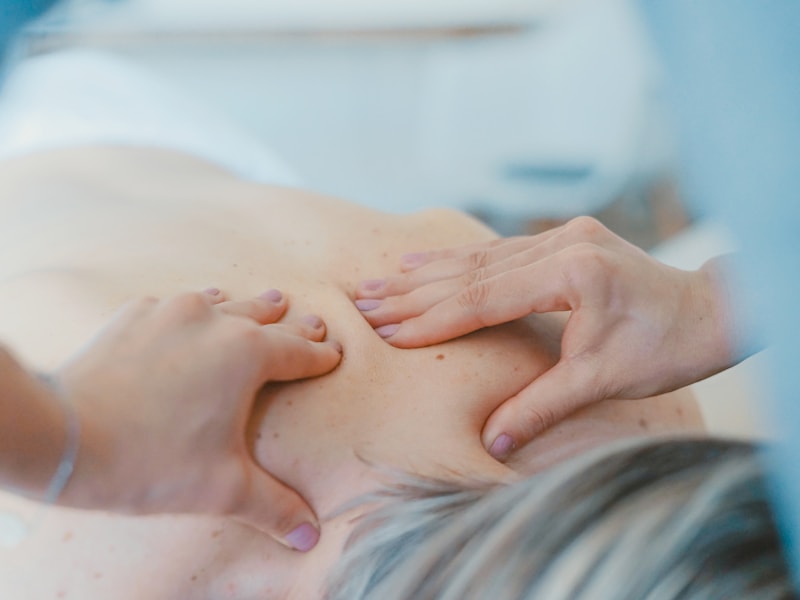
Focused treatment applied to the neck and upper shoulder of a clothed client

Neck, shoulder and jaw treatment

The signature Toronto complaint. Eight hours at a screen, a phone held between ear and shoulder, a laptop on a kitchen island, then a commute spent looking down. The pattern that results is predictable: shortened pectorals and upper trapezius, an overworked levator scapulae, restricted thoracic extension, and a jaw that clenches through it all. Treatment addresses the whole chain rather than only the spot that hurts, because the spot that hurts is usually the tissue that got tired last.

  • Upper trapezius, levator scapulae, scalene and suboccipital work
  • Pectoral and anterior shoulder release to restore thoracic extension
  • External jaw and temporomandibular treatment for clenching and tension headaches
  • Intraoral technique only where clinically indicated and only with written consent

Indicative range: $75 to $95 for a focused 30 minute session, $110 to $140 for 60 minutes, plus HST.

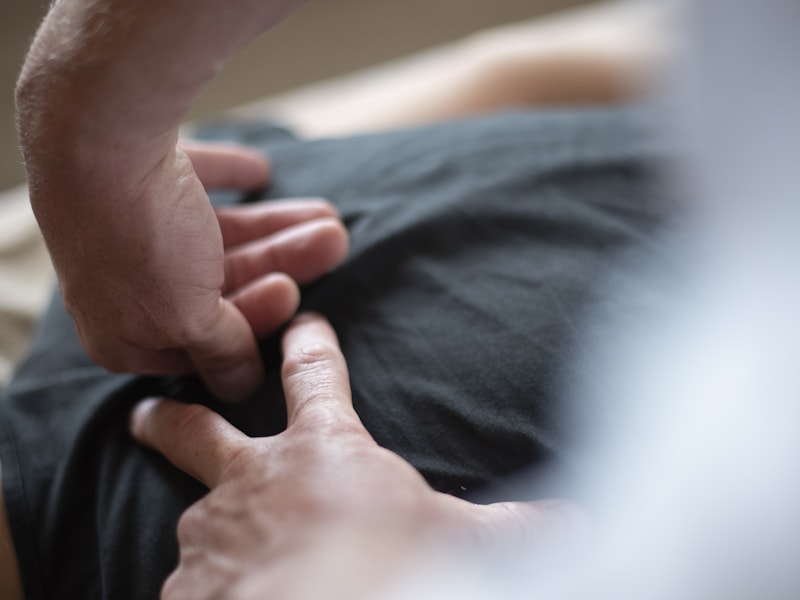
Treatment applied across the lower back and lumbar region of a client lying prone

Low back and hip therapy

Prolonged sitting shortens hip flexors and switches off glutes, and the low back absorbs the difference. Add a car seat for thirty-three minutes each way and the pattern entrenches. Treatment targets the quadratus lumborum, gluteal group, piriformis, deep lateral rotators and iliopsoas, alongside the lumbar erectors that usually get all the blame and none of the cause.

  • Lumbar erector, quadratus lumborum and thoracolumbar fascia work
  • Gluteal, piriformis and deep lateral rotator treatment
  • Iliopsoas and hip flexor release where assessment supports it
  • Guidance on desk and seat setup that takes minutes rather than a new chair

Indicative range: $110 to $140 for 60 minutes, $130 to $160 for 75 minutes, plus HST.

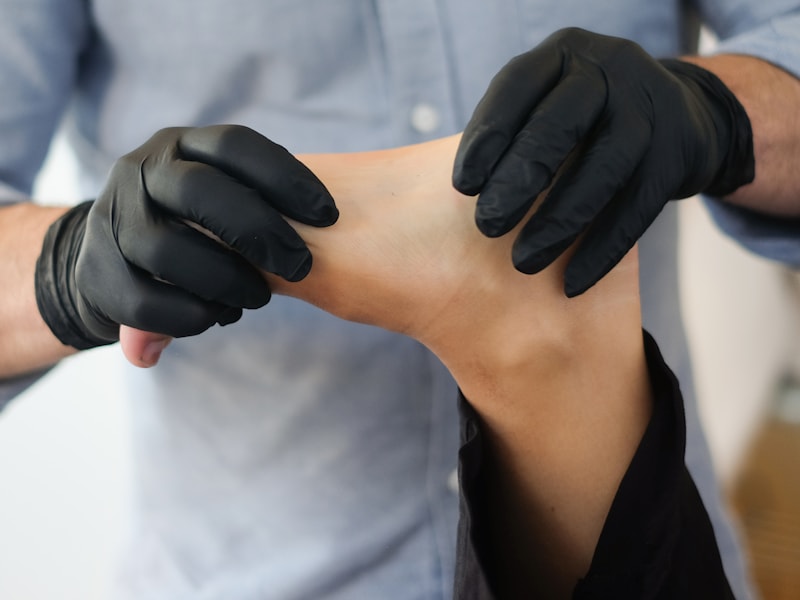
A clinician in gloves treating a client's shoulder as part of a rehabilitation appointment

Motor vehicle accident recovery

Soft tissue injury after a collision is the most common category in Ontario's accident benefits system, and it is also the one clients most often fund themselves by mistake. Whiplash-associated disorder, thoracic and lumbar strain, seatbelt-pattern shoulder injury and the headaches that follow all respond to massage therapy, and all of it may be payable by your auto insurer regardless of who caused the collision.

  • Treatment plan prepared on the OCF-18 and submitted through the Health Claims for Auto Insurance system
  • Direct billing to the auto insurer, so treatment does not come out of pocket
  • Progress documentation maintained so reassessment and extension requests are supported
  • Coordination with your physician, physiotherapist or legal representative where a file requires it

Billed to the auto insurer at accident benefits rates. Where a plan is approved, there is normally nothing payable by you.

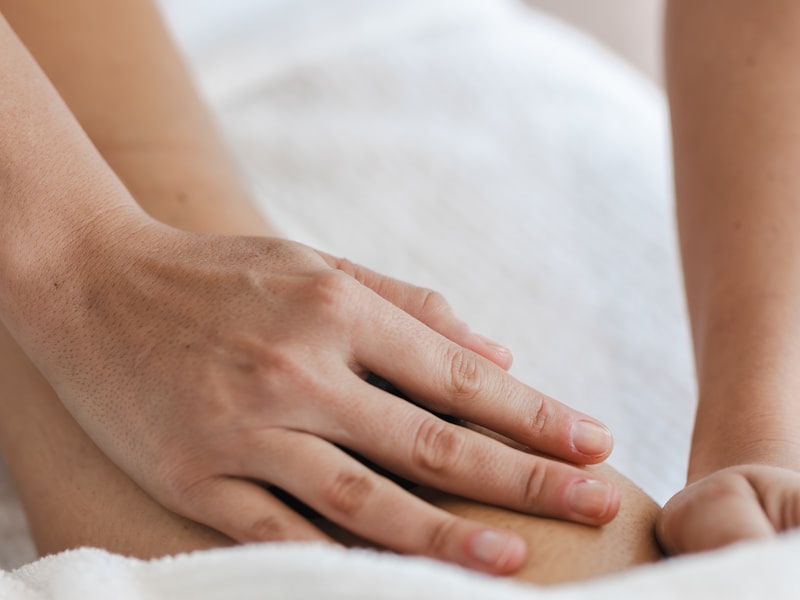
Massage technique applied along a client's calf and lower leg over a towel

Sports, training and repetitive strain

Treatment built around a training calendar rather than dropped into it at random. Pre-event work that leaves tissue responsive rather than flattened, post-event and recovery work, and in-season maintenance for the tissues your sport actually loads. Also the repetitive strain that has nothing to do with sport: forearm and wrist patterns from keyboards and trades, rotator cuff irritation from overhead work, plantar and calf complaints from standing shifts on hard floors.

  • Pre-event, post-event and recovery treatment timed around competition
  • Forearm, wrist and elbow work for keyboard, tool and racquet loads
  • Rotator cuff and shoulder girdle treatment for overhead and lifting patterns
  • Calf, achilles and plantar treatment for runners and standing shift workers

Indicative range: $110 to $140 for 60 minutes, $150 to $190 for 90 minutes, plus HST.

Gentle side-lying treatment applied to a client's shoulder and upper back with bolstering

Prenatal and postnatal massage

Side-lying positioning with proper bolstering rather than a table with a cut-out, which is safer and considerably more comfortable through the second and third trimesters. Work focuses on the low back, hips, sacroiliac joints and legs as posture and load change week to week, and postnatally on the neck, upper back and shoulders that carrying, feeding and settling a newborn recruit hardest.

  • Side-lying positioning with full bolstering, adjusted as pregnancy progresses
  • Low back, sacroiliac and hip treatment for changing load and pelvic mechanics
  • Leg and calf work for swelling and cramping, within appropriate screening limits
  • Postnatal treatment for the neck, upper back and forearm patterns of newborn care

Indicative range: $110 to $145 for 60 minutes, plus HST.

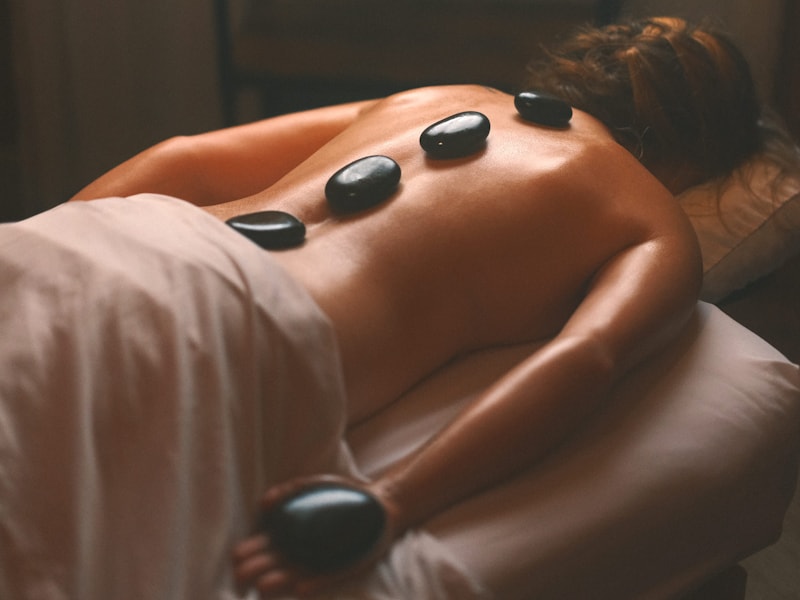
Heated stones positioned along a client's back during a modality-led treatment

Myofascial release, cupping and hot stone sessions

Modality-led appointments for people who respond better to sustained, slower input than to direct compression. Myofascial work uses long, low-load holds to change tissue that resists faster technique. Cupping applies decompression rather than compression, which suits guarded tissue and broad areas like the thoracolumbar region. Heated stones are used as a tool for warming tissue efficiently before deeper work, not as a spa add-on.

  • Sustained myofascial holds for guarded or chronically restricted tissue
  • Cupping for decompression across broad regions, with expected marking explained beforehand
  • Heated stone application to prepare tissue before deeper manual work
  • Modality choice driven by assessment, never sold as an upgrade

Indicative range: $130 to $160 for 60 minutes, $165 to $195 for 90 minutes, plus HST.

Indicative pricing for massage therapy in Toronto

Benchmarked against published Ontario survey data

The ranges below are market ranges, benchmarked against surveyed 2026 average rates published by the Registered Massage Therapists' Association of Ontario for its two Toronto districts, which split the city at Yonge Street, and cross-checked against posted rates at comparable Toronto clinics. Those surveyed averages for a 60 minute treatment sit at $127.60 in the district covering Toronto west of Yonge and $118.85 in the district covering Toronto east of Yonge, before tax. The ranges below bracket that published data rather than undercut it.

Coverage planner

Work out what your plan actually covers

Enter your annual maximum and how your plan reimburses. Percentages apply to the amount you actually pay, tax included. The arithmetic below uses the indicative rates printed on this page. Nothing is submitted until you choose to send it, and no figure is stored.

$0$2,000
50%100%
No cap$160
Appointment length

Sessions your coverage funds

4 sessions

at the midpoint of the 60 minute range

  • Midpoint fee $125.00 plus HST, so $141.25 at the counter.
  • Your plan reimburses about $113.00 a visit.
  • You pay roughly $28.25 per visit out of pocket.
Bring this line to the form so the appointment is set up correctly: 60 minute appointment, $500 annual maximum, 80% reimbursement, no per-visit cap
Request this appointment

Arithmetic only, based on figures you enter and the indicative midpoints printed on this page. It is not a quotation, not a coverage confirmation, and not financial advice. Confirm your remaining balance, reimbursement rate and any per-visit cap with your insurer.

The standard treatment length

60 minutes

The working length for most complaints, and enough time to treat two or more regions properly after assessment. This is the appointment most Toronto clients book, and the one the market rate is quoted against.

$110 to $140 before HST, indicative

  • Assessment findings reviewed and the plan confirmed before treatment
  • Two or more regions treated, applied to assessed findings
  • Pressure negotiated out loud and adjusted throughout the session
  • Draping repositioned by the therapist, never by asking you to move
  • Receipt issued at the appointment with the registration number on it
  • Direct billing set up where your plan permits it
Request a 60 minute appointment

30 minutes

$75 to $95 before HST

One region, maintenance between longer sessions.

  • Single-region focus
  • Useful between longer visits
  • Neck and shoulder is the common booking
  • Same documentation standard
Request an appointment

45 minutes

$90 to $115 before HST

One or two regions with assessment time included.

  • Room for reassessment
  • Two regions if focused
  • Common follow-up length
  • Same documentation standard
Request an appointment

75 minutes

$130 to $160 before HST

Multiple regions, or a first appointment with full assessment.

  • Recommended first appointment
  • Full orthopaedic assessment
  • Multi-region treatment
  • Same documentation standard
Request an appointment

90 minutes

$150 to $190 before HST

Full body treatment, or complex multi-region work.

  • Whole-chain treatment
  • Complex presentations
  • No rushing between regions
  • Same documentation standard
Request an appointment

120 minutes

$215 to $260 before HST

Extended treatment for widespread or chronic presentations.

  • Widespread presentations
  • Chronic multi-region cases
  • Booked after assessment
  • Same documentation standard
Request an appointment

Modality sessions

$130 to $195 60 to 90 min, before HST

Cupping, hot stone or myofascial-led appointments.

  • Chosen from assessment
  • Marking explained beforehand
  • Never sold as an upgrade
  • Same documentation standard
Request an appointment

What moves your number inside these ranges

  • Appointment length, which is the single largest driver
  • Whether the appointment includes a full initial assessment
  • Modalities used, since cupping and hot stone sessions carry a premium across the Toronto market
  • Location within the city, with downtown and midtown clinics generally sitting at the upper end
  • Whether the session is direct billed, which changes what you pay on the day but not the fee
  • Whether treatment is funded through accident benefits, which is billed at a separate schedule of rates

Indicative pricing note. Every figure on this page is an indicative range drawn from published 2026 market data for registered massage therapy in Toronto. It is not a quotation and it is not an offer to contract. Your figure is confirmed in writing before your appointment, and it does not change afterwards. Amounts are in Canadian dollars.

Full disclosure block. Ranges exclude 13% HST, which is added to all massage therapy services in Ontario. Ranges also exclude any product you choose to purchase, any charge your plan declines to reimburse, and any fee for a missed appointment or a cancellation made inside the stated notice period. Treatment funded through Ontario accident benefits is billed to the auto insurer at accident benefits rates rather than at the ranges shown here.

Common problems we treat

Six presentations, and the Toronto conditions behind them

Each one is tied to something specific about working, commuting, training or recovering in this city rather than to generic wellness language.

01

The commute is doing more damage than the desk

Toronto has the longest average commute in Canada. Statistics Canada put it at 33.3 minutes each way, well above the national average of 26.4, and roughly three in four workers whose home and workplace are both inside the Toronto region make that trip by car, truck or van. That is more than an hour a day in a fixed seated position with the hips flexed, the thoracic spine rounded and the arms held forward. Add a full workday in a similar shape and the tissue never gets a chance to reset. Treatment targets the hip flexors, gluteal group and thoracic spine, because the low back and neck pain that show up are usually consequences rather than causes.

02

Hybrid work moved your desk to a kitchen island

The home setup that got improvised in a hurry is frequently still in place. A laptop screen sitting well below eye level pulls the head forward and loads the cervical extensors and suboccipitals continuously. A dining chair with no lumbar support shifts the pelvis into a posterior tilt. Two or three days a week in that configuration and the rest in an office produces an asymmetric, inconsistent load that tissue adapts to badly. Treatment addresses the pattern, and the conversation about setup takes five minutes and costs nothing.

03

Benefits are expiring with money still in them

Most extended health plans reset on January 1 and do not carry forward. Massage therapy is one of the most commonly included paramedical benefits in Canadian plans, and annual maximums commonly fall between $300 and $1,000 depending on the plan tier. Unused coverage simply disappears at year end. If you have not checked your remaining balance this year, that is the single highest-value phone call you can make to your insurer, and it takes about four minutes.

04

A collision on an arterial road, and nobody explained the paperwork

Soft tissue injuries from collisions on roads like Lake Shore, Eglinton, Kingston Road, Dufferin and the DVP ramps are routine. What is also routine is clients paying out of pocket for months before discovering their auto policy would have funded the treatment. Ontario's accident benefits system is no-fault, meaning you claim through your own insurer regardless of who caused the collision, and medical and rehabilitation benefits remain mandatory in every policy. The paperwork has to be started properly and early.

05

Winter loads the body differently

Snow clearing is a repeated flexion and rotation task performed cold, usually before coffee and often by people who do nothing similar for the other eight months. Walking on ice changes gait to a short, guarded, high-tone stride that loads the calves, peroneals and hip stabilisers. Both patterns produce a predictable January and February pattern of low back and calf presentations. Both respond well to treatment, and both are largely preventable with a warm-up that takes two minutes.

06

You booked a massage, and the claim came back rejected

This is a Toronto-specific trap worth understanding properly. The city has a large market of massage and bodywork providers who are not registered with CMTO. Their services may be perfectly pleasant and are sometimes excellent, but they are not registered massage therapy, and no extended health plan in Canada will reimburse them. The receipt is the tell: without a CMTO registration number and the therapist's registered name, the claim will not pay. Check the public register before you book, not after you have paid.

A client's checklist

What to expect, and what to ask

Educational rather than comparative. The first list is the standard this practice holds itself to. The second is what we would ask of any massage therapist in Ontario, including this one.

The standard we work to

  • Registration status current with CMTO and verifiable on the public register at any time
  • A full health history and screening before any hands-on work at the first appointment
  • Assessment findings explained in plain language before treatment starts
  • Informed consent obtained at every appointment, and written consent for any sensitive area
  • Draping that leaves only the region being treated exposed, repositioned by the therapist
  • A treatment plan with a stated goal, a proposed number of visits and a reassessment point
  • Receipts issued at the appointment carrying the registered name, registration number, date, service and amount
  • Client health records kept to the ten-year retention standard the College requires
  • A referral, promptly, when a presentation falls outside the massage therapy scope of practice
  • A response to every form submission within one business day

Questions worth asking any massage therapist before you book

  • What is your CMTO registration number, and is the name on my receipt the name on the public register?
  • Will my first appointment include an assessment, and is that assessment included in the session fee?
  • What is the treatment plan, how many visits does it propose, and when do we reassess it?
  • What happens at that reassessment if it is not working?
  • Do you direct bill my insurer, and what portion would I pay on the day?
  • If my treatment relates to a collision, do you submit treatment plans through the auto insurance claims system?
  • How is consent handled, and how do I stop a technique I am not comfortable with?
  • How long are my health records kept, and how do I get a copy?
  • What is your cancellation policy, and what notice period applies?
  • Is everything you are proposing inside the massage therapy scope of practice?

That last question is a better filter than most people expect. Massage therapists in Ontario are not authorised to perform controlled acts, with one exception: acupuncture, and only where the College has specifically authorised that registrant. A therapist offering needling under another name, or offering to diagnose a condition, is operating outside the scope, whatever the technique is called.

How it works

From first message to reassessment

Six steps. Each carries a commitment this practice controls, so each is something you can hold us to.

Send the form

Tell us what hurts, roughly how long it has been going on, what makes it worse, and whether you intend to claim through an extended health plan or an auto insurer. Two or three sentences is plenty. If you are not sure whether massage therapy is the right approach, say that instead and we will tell you honestly.

A reply within one business day

Every submission receives a response within one business day with available appointment times, the recommended first appointment length, and the exact fee for that appointment confirmed in writing. If your presentation looks like it belongs with another regulated professional, you will be told that at this stage rather than after you have paid for a session.

Health history and consent, before anything else

Your first appointment opens with a health history covering medications, conditions, previous injuries and anything that would make a technique inadvisable. Consent is then obtained for the assessment and the proposed treatment, with the elements explained rather than presented as a form to initial. Written informed consent is obtained separately for any sensitive area, and declining it does not end the appointment.

Assessment and a plan you agree to

Range of motion, palpation and postural assessment, followed by findings explained in language that does not require a background in anatomy. You then hear the proposed plan: what will be treated, roughly how many visits it should take, and when it will be reassessed. Treatment begins in that same appointment once you have agreed to it.

Treatment, with the controls in your hands

Pressure is checked and adjusted throughout. Draping keeps everything covered except the area being worked on, and it is repositioned by the therapist rather than by asking you to move. You can ask to change technique, skip a region, or end the session entirely at any point, and the appointment simply adapts. Nothing about that is treated as unusual.

Receipt, rebooking and reassessment

Your receipt is issued at the appointment with everything a benefits plan needs on it. Where direct billing is available you pay only your portion. Rebooking is offered but never assumed, and no standing appointment is set up without you asking for one. At the reassessment point the plan either continues, changes, or ends with a referral. All three of those are acceptable outcomes.

Toronto neighbourhoods served

Clients travel from across the city

These are the Toronto neighbourhoods and districts most represented in the practice, all within Ontario.

Financial DistrictEntertainment DistrictKing West Queen WestLiberty VillageFort York CityPlaceSt. LawrenceDistillery District CorktownCabbagetownChurch and Wellesley Kensington MarketLittle ItalyTrinity Bellwoods OssingtonThe AnnexYorkville RosedaleSummerhillDeer Park Yonge and EglintonDavisville VillageForest Hill Lawrence ParkLeasideRiverdale LeslievilleGreektown on the DanforthEast York The BeachesBirch CliffParkdale RoncesvallesHigh ParkSwansea Bloor West VillageThe JunctionMimico Humber Bay ShoresThe KingswayWillowdale North York CentreBayview VillageDon Mills Scarborough Junction

Appointments are also regularly booked by people who live outside the city and work inside it, which is a large share of the Toronto workforce. If you commute in, the practical question is usually whether an appointment fits before work, at lunch or after, and that is worth raising in your first message.

A Toronto guide to registered massage therapy

Six things that are true whether or not you book here

All of them come from legislation, regulation, municipal code or published association data, and all of them are verifiable.

What "RMT" legally means in Ontario

Massage therapy is regulated in Ontario under the Massage Therapy Act, 1991, within the framework of the Regulated Health Professions Act, 1991. The College of Massage Therapists of Ontario registers practitioners and protects the titles. Entry to practice normally requires a diploma program of roughly 2,200 hours, typically two to three years, followed by the College's certification examinations, which comprise a multiple-choice examination and an objectively structured clinical evaluation administered through a third-party testing provider, plus a jurisprudence program.

Registrants then complete the College's quality assurance program annually and must practise at least 500 hours in every three-year period or complete a refresher course. The College also requires every registrant holding a general certificate to carry professional liability coverage continuously, at minimums the College sets. None of that is a claim about any one practice; it is the entry standard for everyone in the province, and the public register is where you confirm an individual meets it.

Massage therapy is taxable in Ontario, and that surprises almost everyone

Registered massage therapy carries 13% HST in Ontario. This is the single most common misunderstanding in the field, because physiotherapy, chiropractic, optometry and several other regulated health services are exempt. The reason is technical rather than clinical: GST/HST exemption for a health service requires that the profession be named in Schedule V, Part II of the federal Excise Tax Act, and massage therapy has never been added to that list. Provincial regulation under the Regulated Health Professions Act has no bearing on a federal tax statute.

National associations have been petitioning for the change for years, and a private member's bill was amended in 2024 to include massage therapy, but as matters stand no amendment has passed. Practically, this means any Toronto price you see quoted without tax will be 13% higher at the counter, and you should read every posted rate carefully to see whether tax is included.

But it is still an eligible medical expense on your tax return

The tax treatment splits in an unintuitive way. Massage therapists appear on the Canada Revenue Agency's list of authorized medical practitioners for Ontario, which means fees paid to a CMTO-registered therapist are eligible for the medical expense tax credit. The service is taxable for HST purposes and creditable for income tax purposes at the same time.

The credit applies to eligible expenses above a threshold, calculated as the lesser of 3% of net income or a fixed annual amount the CRA sets each year, so it usually matters most when massage therapy sits alongside dental work, prescriptions, physiotherapy or eyewear in the same year. Keep the receipts; they need the practitioner's name, registration number, date and amount, which is the same information your benefits plan wants.

How Toronto's licensing bylaw separates RMTs from everyone else

The City of Toronto regulates two categories of business under Chapter 545 of the Toronto Municipal Code that people routinely confuse with registered massage therapy. Body-rub establishments provide non-medical, non-therapeutic massage, require a City business licence, are capped at 25 across the whole city, and may only operate in employment industrial zones away from residential areas, schools and places of worship. Holistic centres provide services such as reiki, aromatherapy and shiatsu, are permitted in commercial-residential zones, and number in the hundreds.

Critically, the City's own definition of a holistic centre excludes registered massage therapy, and Municipal Licensing and Standards stopped issuing municipal licences to massage therapists in 1999 precisely because the Regulated Health Professions Act took over that role. So an RMT is not a City-permitted operator; an RMT is a regulated health professional. If a provider's authority to practise rests on a municipal permit or an association membership card rather than on CMTO registration, that is a meaningful distinction and your insurer will treat it as one.

Extended health benefits: what Ontario plans actually cover

The Ontario Health Insurance Plan does not cover massage therapy at all, which puts the whole cost on private coverage or on you. Most Ontario group plans include massage therapy under paramedical services, with annual maximums commonly between $300 and $1,000. Plans differ in structure more than in generosity: some reimburse a percentage of the fee, often 80% or 100% up to the maximum; some pay a flat amount per visit, which means a $140 session against a $75 per-visit cap leaves you the difference; and some pool massage therapy into a shared paramedical maximum with physiotherapy, chiropractic and acupuncture, so what remains depends on what else you have claimed.

Most Ontario plans no longer require a physician's referral, but a minority still do, and individual personal health plans require one more often than employer plans. Two calls are worth making before your first appointment: confirm your remaining annual balance, and confirm whether a referral is required. Every plan reimburses only treatment by a registered therapist, which is why the registration number on the receipt is not a formality.

Ontario's 2026 auto insurance changes, and why they matter to your benefits

Ontario's accident benefits rules changed materially on July 1, 2026, under regulatory amendments that restructured the Statutory Accident Benefits Schedule. Two points matter here. First, medical, rehabilitation and attendant care benefits remain mandatory in every Ontario auto policy, while most other accident benefits, including income replacement and caregiver benefits, became optional coverages that a policyholder must now actively select. Second, and more useful day to day: auto insurance is now the first payer for accident-related medical and rehabilitation costs, ahead of your workplace or private health plan. Previously many people burned through their extended health massage maximum on collision-related treatment before the auto insurer engaged. Under the current rules the auto policy pays first, which preserves your paramedical benefits for everything else in the year.

The mechanics have not changed. Injuries classified under the Minor Injury Guideline, which covers sprains, strains, whiplash-associated disorders and clinically associated sequelae, carry a $3,500 limit for medical and rehabilitation benefits. Injuries falling outside that guideline and short of catastrophic carry up to $65,000. Treatment beyond an initial assessment requires a treatment plan submitted on the OCF-18 form through the Health Claims for Auto Insurance system, and the insurer must respond within ten business days. A denial is not the end of the matter; it is the start of a dispute process. The practical advice is unchanged and simple: report the collision, get the claim number, and ask about accident benefits before you start paying for treatment yourself.

Client feedback

Why there are no client quotes on this page

Most massage therapy websites in Toronto carry a wall of glowing quotes. This one does not, and the reason is regulatory rather than modest.

What the regulation actually says

Advertising by massage therapists in Ontario is governed by the General Regulation under the Massage Therapy Act, 1991. That regulation defines an advertisement broadly enough to cover any website, and it prohibits an advertisement from containing a testimonial by any person, including a client, a former client, or a friend or relative of either. The prohibition is not a guideline. CMTO's own advertising guidance states it plainly, adds that registrants must take all reasonable steps to disable social media functions that collect testimonials, and treats non-compliant advertising as a matter of professional misconduct.

What else the same rule prohibits

The same regulation prohibits several other things that are ordinary elsewhere in local marketing. An advertisement may not contain anything false, misleading or deceptive. It may not contain factual information the registrant cannot verify. It may not compare the practice to another practice in a way that suggests superiority. It may not carry an endorsement of a particular product or brand, or display the College's logo, which would imply that CMTO endorses the practice.

What a compliant advertisement may contain is instructive: practice location, accessibility, hours, contact details, information about education and training, detail on services within the scope of practice, and the identity of the therapist primarily responsible for the practice. In other words, verifiable facts. That is what this page contains.

So instead of quotes, judge this practice on the commitments listed above and on the public register. Both are checkable before you spend anything. A profession that prohibits testimonials outright is telling you something useful about what evidence is worth: a therapist you can look up in a public database beats a quote from a stranger you cannot.

Frequently asked questions

Answered straight

How much does a massage therapy session cost in Toronto?

Indicative Toronto ranges run from roughly $75 to $95 for 30 minutes, $110 to $140 for 60 minutes, and $150 to $190 for 90 minutes, before 13% HST. Those ranges bracket the 2026 average rates published by the Registered Massage Therapists' Association of Ontario for its two Toronto districts, which divide the city at Yonge Street. Your figure depends on appointment length, whether a full assessment is included, and which modalities the treatment uses. It is confirmed in writing before your appointment.

Is massage therapy covered by OHIP?

No. The Ontario Health Insurance Plan does not cover massage therapy in any circumstance. Coverage comes from an extended health benefits plan through an employer or purchased privately, from auto insurance accident benefits after a collision, or from you directly.

Do I need a doctor's referral?

Not to book. Massage therapy is a direct-access profession in Ontario and you can make an appointment yourself. Some benefits plans still require a physician's referral before they will reimburse, and this is more common with individual personal health plans than with employer group plans. Confirm that with your insurer before your first appointment, because a referral obtained afterwards will not always be applied retroactively.

How do I check that a therapist is actually registered?

Search the CMTO public register. It is open to anyone, it lists every registrant in Ontario, and it shows registration status, certificate type and any restrictions or findings. Check the name exactly as it will appear on your receipt. This takes about a minute and it is the single most useful thing you can do before booking with anyone.

Why is there HST on my massage but not on my physiotherapy?

Because GST/HST exemption depends on the profession being named in Schedule V, Part II of the federal Excise Tax Act, and massage therapy is not on that list while physiotherapy is. Provincial regulation does not change federal tax law. National associations have petitioned for the change for several years and a private member's bill was amended in 2024 to include massage therapy, but no amendment has passed. Massage therapy in Ontario currently carries 13% HST.

Can I claim massage therapy on my income tax return?

In Ontario, yes. Massage therapists appear on the Canada Revenue Agency's list of authorized medical practitioners for Ontario, so fees paid to a CMTO-registered therapist qualify for the medical expense tax credit. The credit applies to eligible expenses above a threshold set as the lesser of 3% of net income or a fixed annual amount, so it usually only produces a benefit when combined with other medical expenses in the same year. Keep receipts showing the practitioner's name, registration number, date and amount.

What is the difference between an RMT and a massage therapist?

There is none. Massage Therapist and Registered Massage Therapist are equivalent protected titles in Ontario, and MT and RMT are the equivalent abbreviations. Anyone using any of the four is telling you they are registered with CMTO. Someone offering massage without those titles is not in the regulated profession, and their receipt will not be reimbursed by a benefits plan.

How many sessions will I need?

That is answered after assessment, not before, and the honest answer varies enormously with the presentation. What you should expect is a plan that states a proposed number of visits and a reassessment point, so the question gets revisited with evidence rather than extended indefinitely. If treatment is not producing change by the reassessment, the plan changes or you get a referral.

What happens at the first appointment?

Health history and screening, informed consent, assessment covering range of motion and palpation, findings explained in plain language, a proposed treatment plan, and treatment within that same appointment. Allow 60 to 75 minutes. You leave with a receipt carrying everything your benefits plan needs.

Does deep tissue massage have to hurt?

No, and pressure that has you bracing is usually counterproductive because guarded tissue resists treatment. Effective deep tissue work uses sustained, specific pressure that sits at the edge of comfortable rather than past it. Pressure is negotiated out loud at the start and adjusted throughout, and asking for less is a clinical instruction, not an inconvenience.

I was in a car accident. Will my auto insurance pay for treatment?

Very likely. Ontario's accident benefits system is no-fault, so you claim through your own insurer regardless of who caused the collision, and medical and rehabilitation benefits remain mandatory in every Ontario policy after the July 2026 changes. Injuries under the Minor Injury Guideline carry a $3,500 limit; injuries outside it and short of catastrophic carry up to $65,000. Treatment beyond an initial assessment requires a plan submitted on the OCF-18 through the Health Claims for Auto Insurance system, and the insurer has ten business days to respond. Report the collision and get your claim number first.

Will using my auto insurance drain my workplace benefits?

Not any more. As of July 1, 2026, auto insurance became the first payer for accident-related medical and rehabilitation costs, ahead of workplace and private health plans. That change specifically preserves your extended health paramedical maximum for everything else during the year. Before that change, many people exhausted their annual massage coverage on collision treatment their auto policy should have funded.

What can an RMT not do?

Massage therapists in Ontario are not authorised to perform controlled acts under the Regulated Health Professions Act, with one exception: acupuncture, and only where CMTO has authorised that individual registrant. Other needling techniques are outside the scope of practice regardless of the name used. RMTs also do not diagnose conditions. The statutory scope is assessment of soft tissue and joints and treatment of soft tissue and joint dysfunction and pain by manipulation, and treatment that falls outside it should come with a referral rather than a workaround.

Is prenatal massage safe, and how is it positioned?

Prenatal treatment here uses side-lying positioning with full bolstering rather than a table with a cut-out, which is both safer and more comfortable through the second and third trimesters. Screening at the health history stage covers the situations where treatment or particular techniques would be inadvisable, and treatment is adjusted as pregnancy progresses. Tell us you are pregnant when you send the form so the appointment is set up correctly.

How long are my records kept, and can I get a copy?

Client health records are retained for ten years after your last visit, or until ten years after you turn eighteen, which is the standard the College requires. You can request a copy of your record at any time, and it will be provided.

Book an appointment

Use the form, and you will hear back within a business day

The more you put in the message, the more useful the reply will be, so include what hurts, roughly how long it has been going on, what makes it worse, and whether you are claiming through an extended health plan or an auto insurer.

What comes backAvailable appointment times, a recommended first appointment length, and the exact fee for that appointment confirmed in writing before you commit to anything.
How long it takesEvery submission gets a response within one business day.
If it is not the right fitIf your presentation would be better served by another regulated health professional, you will be told that at that point rather than after a session.
CoverageServing Toronto and the surrounding region. Registered massage therapy only, within the scope of practice set out in the Massage Therapy Act, 1991.
Before you bookRegistration is verifiable on the CMTO public register. Check the name exactly as it will appear on your receipt.
Claiming through a planMention your insurer in the message and direct billing is set up at your first visit where your plan permits it.